
Which Box Is It In? Bin Locations Without the Spreadsheet
People asked me about bins on sales calls for years before SKU.io had them. We shipped warehouse locations in July 2026. On a call the morning it was due to go out, the word I used was “Finally.”
A week and a half later I demoed it to a company about to switch, and I couldn’t find the screen that sets a product’s preferred bin. “Again, this is new, so I’m still getting familiar with it.” The pick list I printed for them said every line was “not covered by pickable bins”, because I hadn’t set up a single location. Not my best demo. It did make the point I want to make here, though, which is that bins don’t do anything until something writes to them.
The way most people get by without bins is a spreadsheet. SKU, shelf or box, quantity. It’s right on the day you build it. One part lives on two shelves because the space is tight, so it gets two rows, and those two rows have to add up to what the inventory system says. A style ends up in four boxes. Then someone picks two from the second box, doesn’t open the spreadsheet, and from that minute it’s describing a room that doesn’t exist anymore. A count doesn’t rescue it either. Count shelf by shelf while orders ship and the list is wrong before you get to the end.
I don’t think the format is the problem. Nothing that moves stock touches the spreadsheet, and nothing ever will.
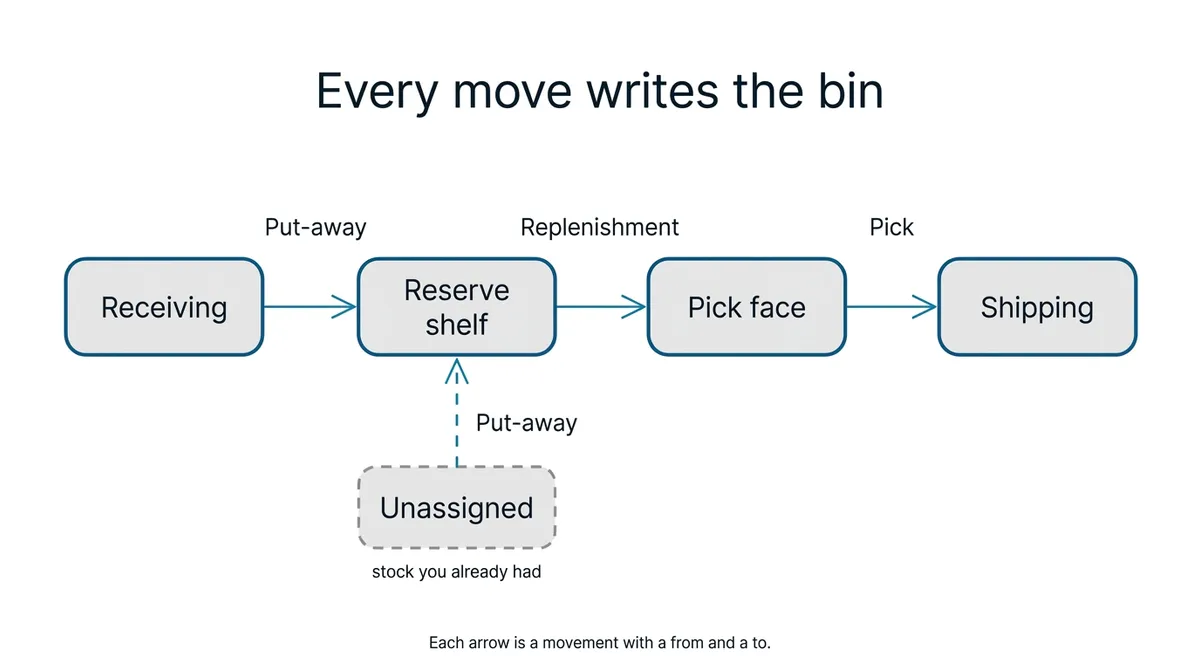
So when you turn locations on for a warehouse in SKU.io, it doesn’t ask you where everything is. It makes four locations, Unassigned, Receiving, Shipping and Returns, and puts all the stock you already have in Unassigned. Orders keep shipping. You lay out your aisles and shelves, print the labels, and then, as I put it on that demo, you “transfer it after the fact, even.” Each time someone takes a case out of Unassigned and puts it on a shelf, that’s a put-away, and now that shelf is right. Unassigned shrinks as the week goes on. You don’t stop shipping to find out where everything is.
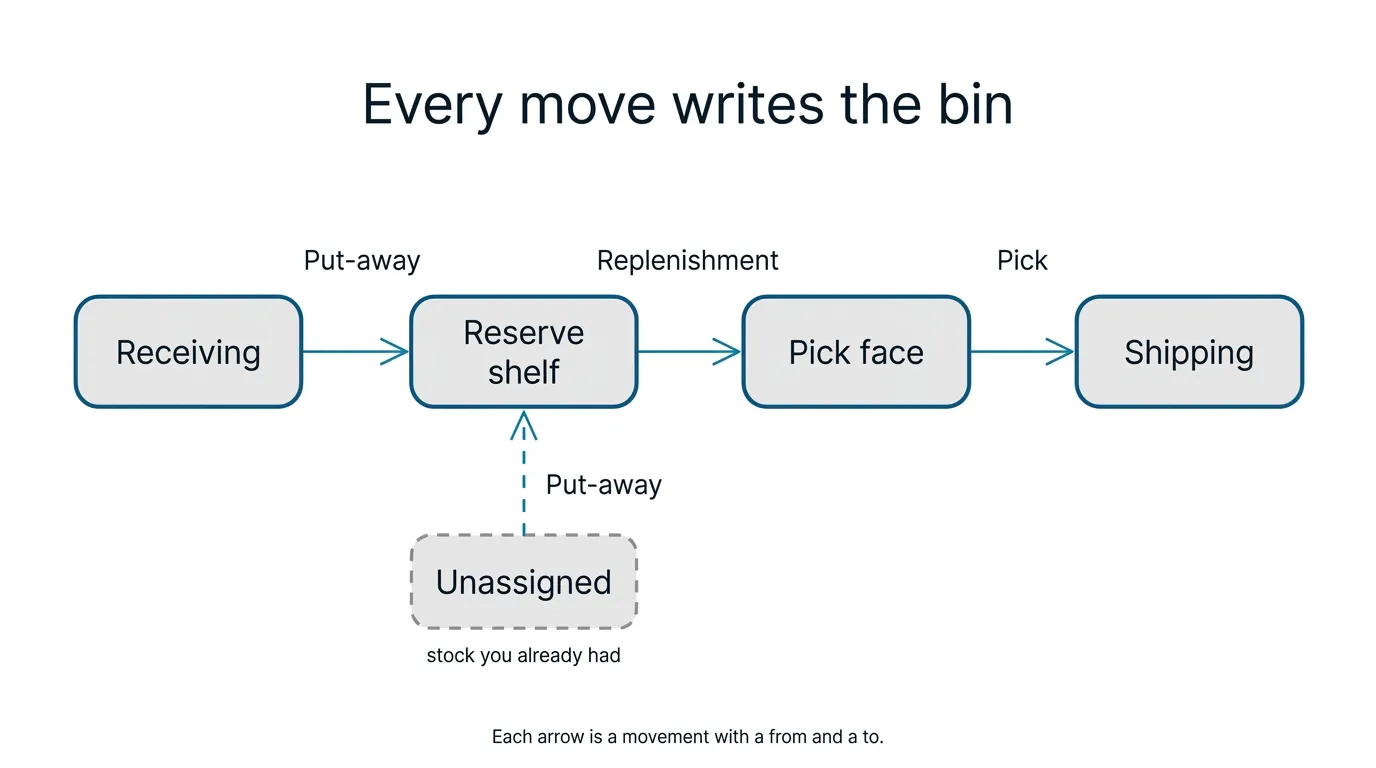
After that it’s the same rule for everything. A delivery lands in Receiving. A pick comes out of a bin marked pickable. Topping up the pick face from the case on the top shelf is a replenishment, from one bin to another. Every one of those is a movement with a from and a to, and that’s the only thing I know of that keeps a bin right.
The bin types are mostly defaults. What a bin can do is set per bin: whether you can receive into it, pick from it, put away from it. By default, stock in a quarantine or damaged bin doesn’t count toward what you can sell. A primary pick bin empties before anyone touches reserve stock. The setup steps are in our docs.
My own resale company runs with locations switched off. Our 3PL picks every order, so which shelf a unit is on is their system’s business, and I’d only be copying their numbers into mine. If one person picks from one room and knows it by heart, a marker on the shelf will do. Bins earn their keep once the same SKU sits in more than one spot and more than one person picks it. Fishbowl does this well, for what it’s worth.
If you’re keeping a which-box spreadsheet next to your inventory system, book a time and I’ll set up a warehouse the Unassigned way with you, preferably on a screen I can find this time.