
SKU.io Features
Make smart, data-driven business decisions for growth
Reports built on the same event ledger that runs your operations — drill from any number to the orders and movements behind it.
Book a Demo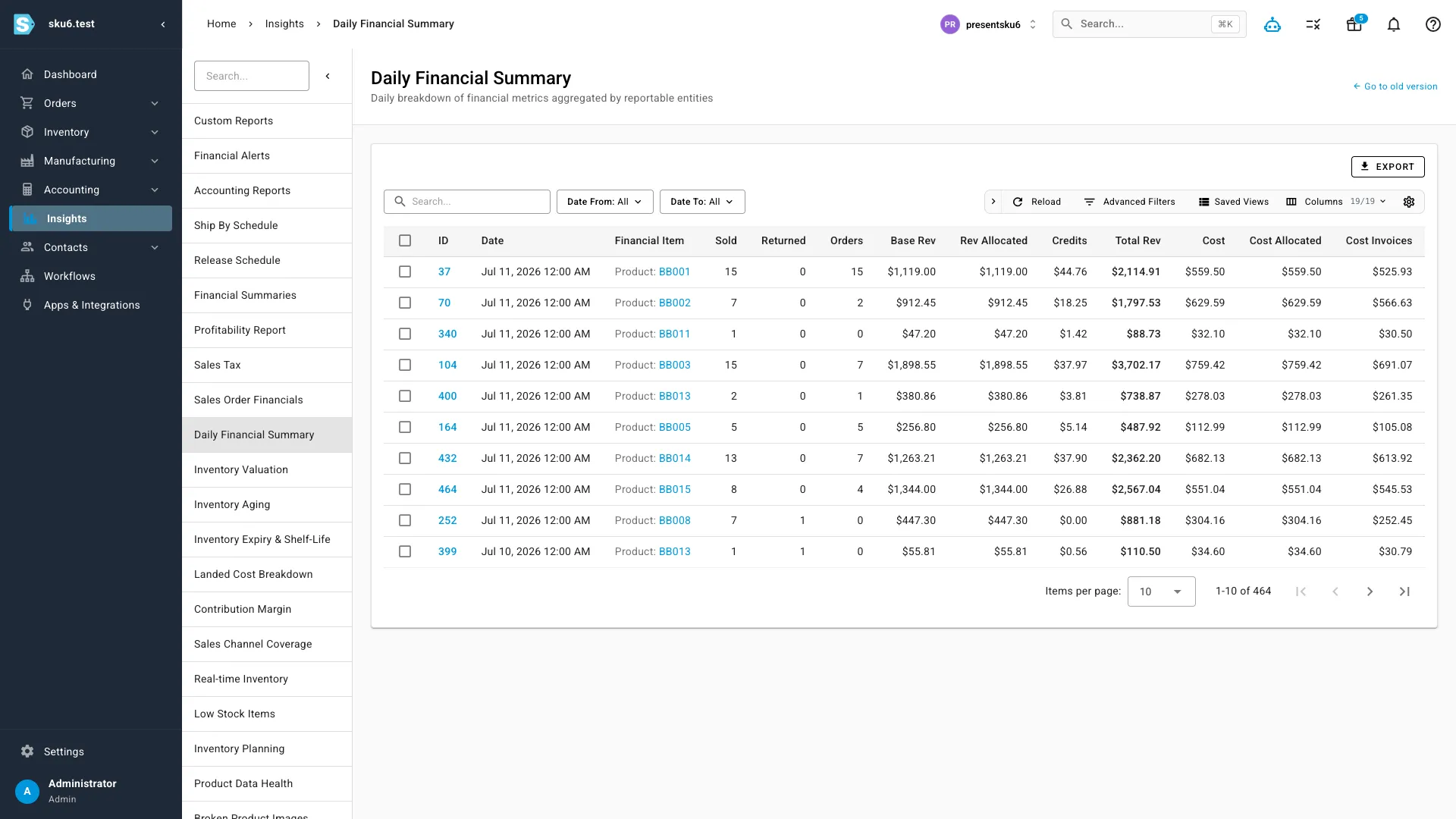
What sets this apart
Every report drills to the source document
Inventory valuation, channel profitability, COGS health — click any number and follow it to the order, the PO, the FIFO layer, the bill. Reports you can defend in a board meeting because you can show where each figure came from.
Ask in plain language
The built-in AI assistant executes real, permission-scoped API calls — build a report, filter a view, pull the numbers — from a sentence. And your own AI agents can do the same through the MCP server.
Bring your own BI
Everything is exportable and everything has an API endpoint (~4,900 documented). If your analyst lives in Sheets, Metabase, or a warehouse, the data is theirs without scraping.
Most reporting tools hand you a chart and ask you to trust it. sku.io reports are built on the same event ledger that runs your operations, so every number opens up to show the orders, shipments, and costs that produced it.
Every figure drills down to its source.
Reports here aren’t summaries bolted onto exports — they’re queries on the perpetual inventory ledger. Click a revenue figure and see the orders behind it. Click a COGS figure and see the FIFO layers, then the purchase order that created them. The meeting stops being “is this number right?” and becomes “here’s how it was produced.”
Contribution margin, order by order.
For every order, sku.io computes revenue minus landed item cost, channel fees, shipping, and transaction costs — then rolls it up by SKU, brand, or channel. Most operators have never seen true per-order margin; here it’s a column you sort by. Which products actually make money stops being a debate. The costing behind it is covered on the accounting page.
One report across every channel.
Stop running a separate report per channel and stitching the exports together in a spreadsheet. Shopify, Amazon, Walmart, eBay, WooCommerce, BigCommerce, and Magento all feed the same ledger, so one report covers all of them — segment by product, brand, warehouse, or channel in the reporting engine. Missing a platform? Integrations get built continuously — 756 pull requests were merged in June 2026 alone.
Inventory reports that answer cash questions.
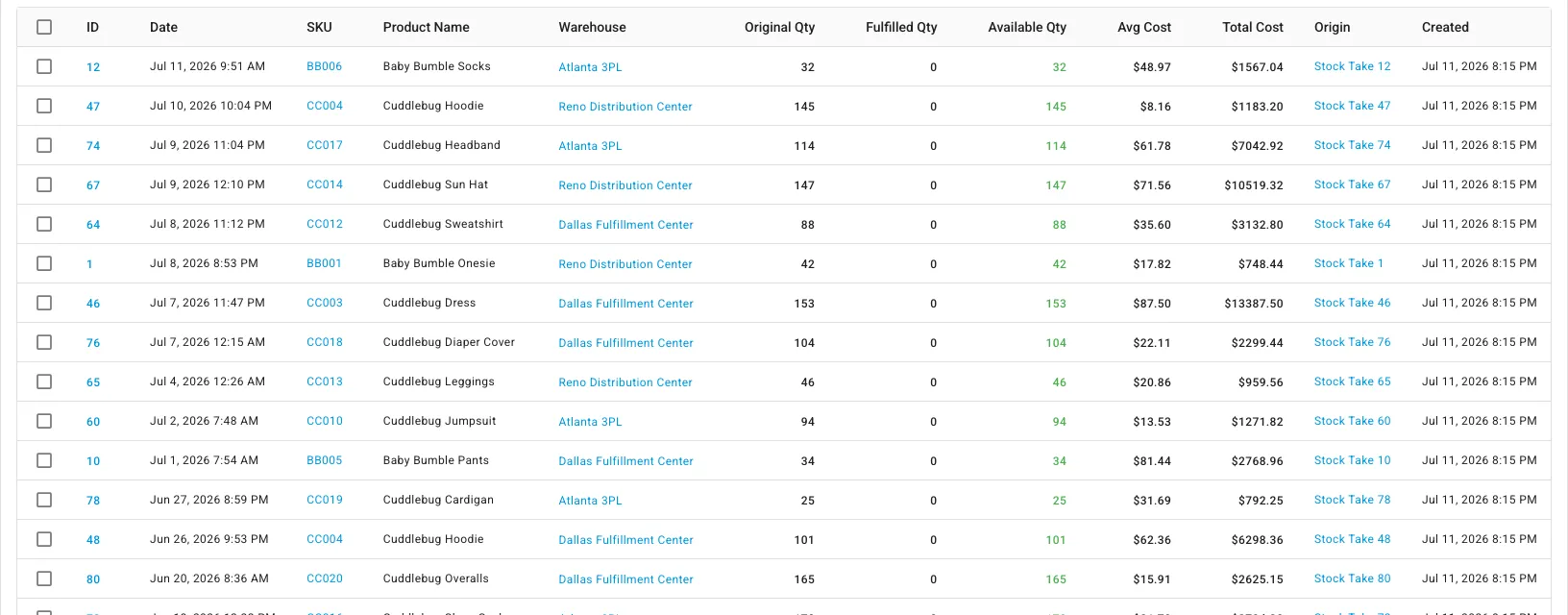
Inventory aging shows which stock has gone stagnant and how much cash it’s tying up. Valuation shows how the value of what you hold moves over time. Demand forecasting shows what to reorder and when. Each is a live view on the ledger, not a monthly export — the same numbers your warehouse is operating on.
Run by exception, not by dashboard-staring.
If-then automation rules and exception alerts watch the ledger for you: stock running low on a channel, an order that stalled, a sale that shipped at negative margin. You get flagged when something needs a decision, instead of checking six portals to confirm nothing broke. One command center, not a browser full of tabs.
Your AI agents can read it too.
Everything the interface can do, the API can do — roughly 4,900 documented endpoints. An MCP server connects agents like Claude directly to your account, so you can ask questions in plain English and get answers pulled from the same ledger-backed reports you see on screen. You may never read the API docs. Your agents will.
Ready to see SKU.io in action?
Bring your real numbers and the messy questions — we'll walk the system against an operation like yours, not a slide deck.
Book a DemoFounder-led demo · 2-day onboarding · no onboarding fees