
SKU.io Features
Sell direct and wholesale from the same ledger
Quotes that reserve stock, rep-entered wholesale orders, customer pricing tiers, invoicing with payment links, EDI — B2B and DTC allocated from one pool of inventory.
Book a Demo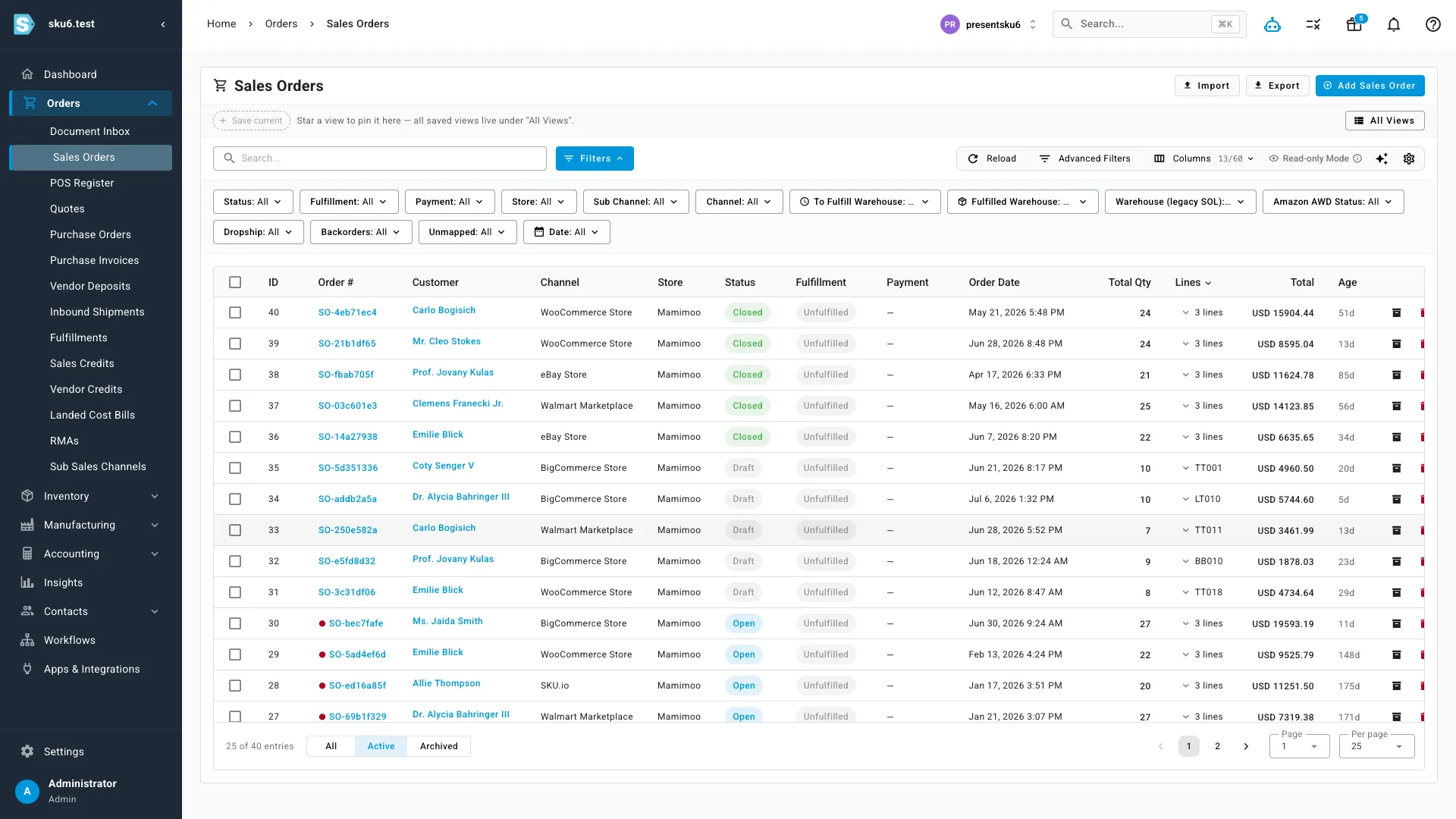
What sets this apart
A quote that holds the stock
Send a quote as a PDF and, if you choose, allocate the inventory the moment it goes out. A valid-until date releases the reservation automatically when the quote expires. Accepted quotes convert to sales orders with pricing locked, and discounts past a limit route to approval.
Wholesale and DTC can't oversell each other
Reserved wholesale orders and channel orders allocate from the same pool, and reserved lines draw against incoming purchase orders. Backorders and manual stock holds are first-class — a big B2B order can't silently eat the stock your Shopify listings are promising.
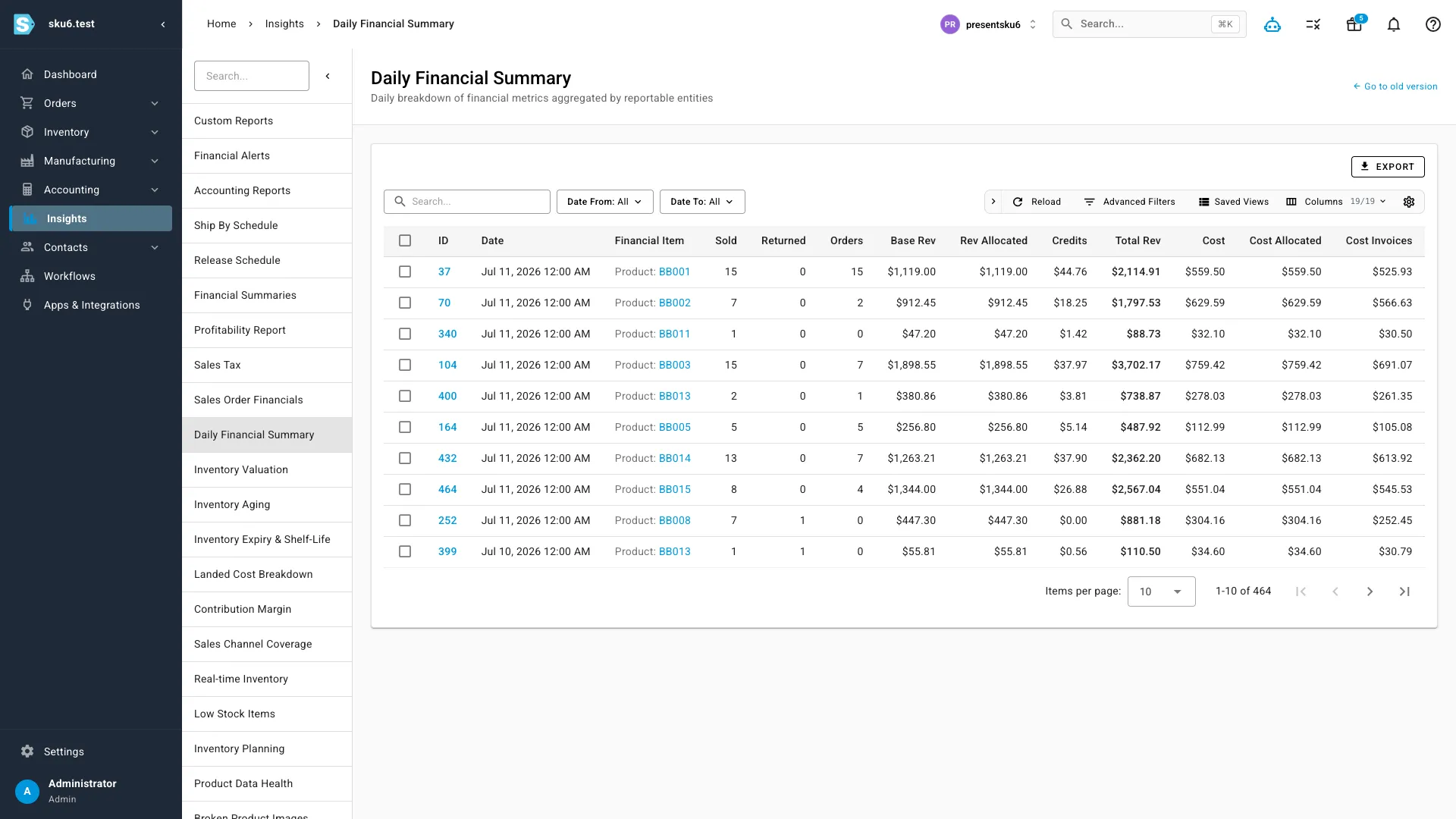
B2B usually lives in the gaps — a price list in a spreadsheet, orders retyped from emailed PDFs, invoices run at month end from a different system. sku.io treats direct sales as a first-class channel: the same ledger, the same allocation, the same margin math your DTC channels already get.
The capability table
| Capability | What it does | Status |
|---|---|---|
| Quotes | Send as a PDF, optionally allocating stock on send. A valid-until date auto-releases the reservation; accepted quotes convert with pricing locked. | Available |
| Reserved sales orders | Approve → reserve → allocate. Reserved lines draw against incoming purchase orders; backorders and stock holds are built in. | Available |
| Sales reps | Reps are managed in sku.io and assigned to customers and orders, so phone and email orders live in the same queue as everything else. | Available |
| Pricing tiers | Per-customer tiers, including relative tiers built from a base price or supplier cost. Multi-currency. | Available |
| Buying requirements | Sell-side order minimums, case/pallet increments, and per-customer catalog limits aren’t native yet — handled with pricing tiers plus scoped custom work, or by the storefront layer in front. | Scoped custom |
| Customer PO intake | Email a buyer’s purchase order in — OCR turns it into a draft sales order, no retyping. | Available |
| Customer accounts | Addresses, per-customer defaults, order history, payment terms, store credit, house accounts, card-on-file. | Available |
| Invoicing & payments | Generate invoices from orders. Take payment by Stripe-hosted invoice or straight from the sales order; refunds and credits at the order, line, or customer level. | Available |
| Accounting sync | Invoices land in QuickBooks or Xero with discounts, the buyer’s PO number, and due dates from the customer’s real payment terms. | Available |
| Order-level margin | Landed cost and contribution margin on every order, wholesale included. | Available |
| Wholesale channels | Faire connects as a channel alongside Shopify, Amazon, Walmart, and TikTok Shop. | Available |
| POS / register | Square and Stripe card capture, park a sale, drawer counts, receipts — for the direct business that walks in or calls. | Available |
| API & agent skills | Everything above has an API call, and open-source agent skills let terminal-based AI agents like Claude Code drive it — here is what that looks like in practice. | Available |
| EDI | Big-retail purchase orders flow through our EDI partners into the same order queue. Each trading partner is a scoped onboarding, typically a few weeks. | Via partner |
| B2B client portal | Wholesale buyers log in to place and track their own orders. | In development |
Weighing the B2B layer against other tools? We keep an honest side-by-side: sku.io vs Shopify B2B vs Zoey vs Cin7 Core.
Buyer self-service today, and the client portal
Today the recommended pattern for buyer self-service is a storefront in front of sku.io — Shopify B2B or Faire takes the order, sku.io owns inventory, allocation, invoicing, and margin behind it. Your reps work directly in sku.io for everything that comes in by phone or email.
A native B2B portal — your wholesale buyers logging in to place and track their own orders against their own pricing — is in development now. We don’t publish dates for unshipped features, so until it’s out, the storefront pattern above is what we’ll recommend.
Wholesale-specific needs beyond that — cost-plus price lists, case or pallet minimums, container-quantity rules — are the kind of thing we scope and build on request, usually in weeks. Send the requirements and you get a real quote, not a roadmap slide.
Where the edges are
- There is no native buyer-facing storefront or checkout yet — that’s what the portal work is for. Today Shopify B2B or Faire fronts the buyer.
- EDI is partner-delivered and scoped per trading partner. It’s a small project we run together, not a toggle in settings. What an SPS Commerce rollout involves.
- Deep per-customer, per-SKU price lists are handled with pricing tiers plus scoped custom work today, not a dedicated price-list module.
Keep looking
The rest of the platform
Every part of the platform runs on the same ledger as this one — the same stock, the same costs, the same events.
- Inventory Management Every unit, every warehouse, on one auditable ledger
- Product Information Management One product record, mapped to every channel listing
- Sales Channel Management Shopify, Amazon, Walmart, eBay — no per-channel fee
- Order Management One queue, routed to your warehouse, 3PL, or MCF
- Direct Sales & B2B Wholesale and DTC from one pool of stockYou're reading this one
- Supply Chain Management Forecast, purchase, receive, assemble, handle returns
- Business Intelligence Drill from any number to the records behind it
- Purchasing Optimization Demand planning that shows its math
- Accounting FIFO COGS and clean journals to Xero or QuickBooks
Ready to see SKU.io in action?
Bring your real numbers and the messy questions — we'll walk the system against an operation like yours, not a slide deck.
Book a DemoFounder-led demo · 2-day onboarding · no onboarding fees