
SKU.io Features
Run every order from one command center
Every channel's orders in one queue, routed automatically to your warehouse, 3PL, Amazon MCF, or a dropship PO — you handle the exceptions.
Book a Demo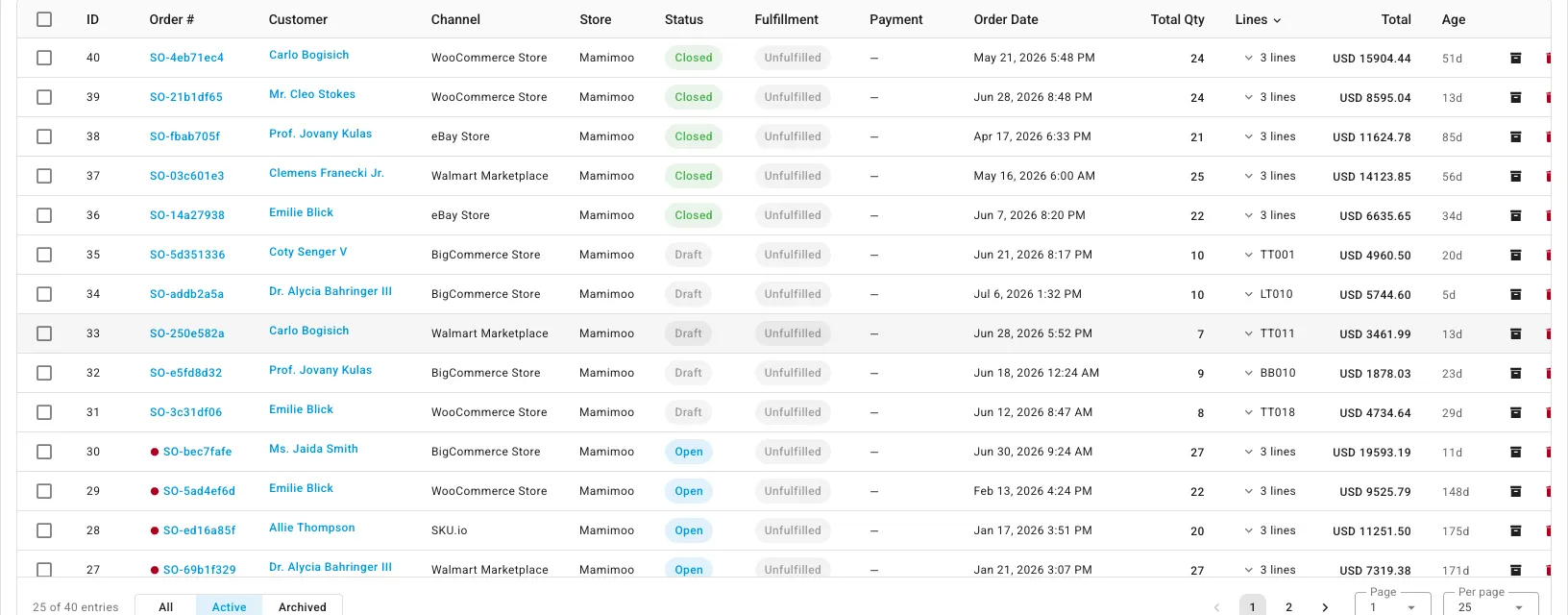
What sets this apart
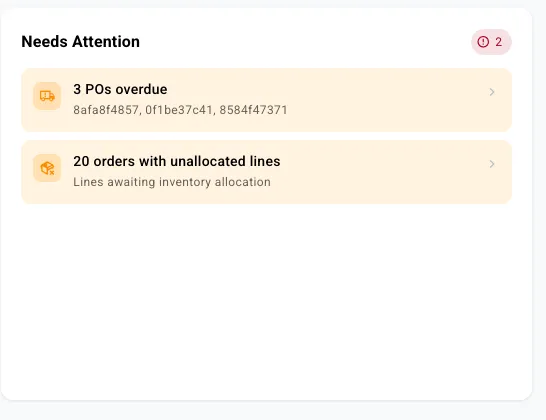
Manage by exception, not by scrolling
Overdue purchase orders, orders with unallocated lines, past ship-by dates — exceptions surface on the dashboard and find you before customers write in asking where their order is. The order list is for working; the problems announce themselves.
Four ways to fulfill. One router.
Own warehouse, push- or pull-based 3PLs, Amazon MCF, dropship — if-then routing rules send each order down the right path automatically, and every fulfillment event lands in the same ledger.
Paperwork that reads itself
The document inbox OCRs supplier invoices and statements into structured drafts matched against purchase orders — data entry becomes review-and-confirm.
You shouldn’t learn about a stuck order from a customer asking where it is. sku.io moves routine orders from channel to warehouse without a human touch, and flags the ones that actually need you.
Manage by exception
Orders import from Shopify, Amazon, Walmart, eBay, and every other connected channel, then move to fulfillment automatically. If-then automation rules make the routine calls — tag it, hold it, route it, split it — and exception alerts surface the orders that need a human: an address that won’t validate, a line that can’t allocate, a shipment that stopped moving. Your team works a short exceptions list instead of eyeballing every order.
Routing picks the fulfillment path
Advanced Order Routing decides where each order ships from, based on rules you define — stock location, destination, channel, whatever your strategy calls for.
Direct
Orders route to your warehouse through an integrated shipping provider. When the order ships, tracking pushes back to the sales channel automatically.
3PL
sku.io sends the fulfillment order to your 3PL and records tracking when they ship — full order flow through warehouses you don’t own or staff.
Amazon MCF
Fulfill any channel’s order from FBA stock. sku.io reads live FBA availability, submits the fulfillment order to Amazon Multi-Channel Fulfillment, and updates the sales order when it ships.
Dropship
A purchase order is generated with your customer as the destination and stays linked to the sales order that created it, so the paper trail survives.
Wholesale, phone, and EDI orders live here too
Manual sales orders are quick to build for wholesale, phone, and point-of-sale business, with customer-specific pricing tiers applied automatically. EDI support brings big-retail purchase orders into the same pipeline as your Shopify orders — one queue, not a separate workflow taped to the side. The full wholesale story — quotes, reserved orders, invoicing, the client portal — is on Direct Sales & B2B.
Every order shows its real margin
Because sku.io carries FIFO costs, landed cost, and reconciled channel fees, each order can display its contribution margin — what those exact units cost, what the channel took, what was left. Most operators have no clue what any single order made; here it’s a column on the order.
An audit trail under every order
Every status change, edit, allocation, and shipment on an order is a recorded event. When something looks wrong, you trace it — click from the order to the fulfillment to the inventory movement to the source document — and get an answer, not a theory.
Keep looking
The rest of the platform
Every part of the platform runs on the same ledger as this one — the same stock, the same costs, the same events.
- Inventory Management Every unit, every warehouse, on one auditable ledger
- Product Information Management One product record, mapped to every channel listing
- Sales Channel Management Shopify, Amazon, Walmart, eBay — no per-channel fee
- Order Management One queue, routed to your warehouse, 3PL, or MCFYou're reading this one
- Direct Sales & B2B Wholesale and DTC from one pool of stock
- Supply Chain Management Forecast, purchase, receive, assemble, handle returns
- Business Intelligence Drill from any number to the records behind it
- Purchasing Optimization Demand planning that shows its math
- Accounting FIFO COGS and clean journals to Xero or QuickBooks
Ready to see SKU.io in action?
Bring your real numbers and the messy questions — we'll walk the system against an operation like yours, not a slide deck.
Book a DemoFounder-led demo · 2-day onboarding · no onboarding fees