Read the Contribution Margin report
Gross margin leaves out the costs that don't sit on an order: marketing, a container's freight, a trade show, software. The Contribution Margin report adds those costs back in. It takes each product's revenue, subtracts cost of goods to reach gross profit, then subtracts the overheads you've allocated to it, so you can see what each product, brand, supplier, or channel really contributes.
Before you begin
- You need access to the Contribution Margin report.
- Record your overheads under Insights → Cost Entries and allocate each one to the products, brands, suppliers, or channels it belongs to. A cost entry that isn't allocated doesn't change any row in this report. It shows up as unallocated in the Profitability report instead.
Steps
-
Go to Insights → Reports and open Contribution Margin.
You can also click Contribution Margin at the top of the Cost Entries list. Manage Cost Entries takes you back.
-
Set the Date Range. Use Indirect Cost Type to include only one type of overhead, such as marketing.
-
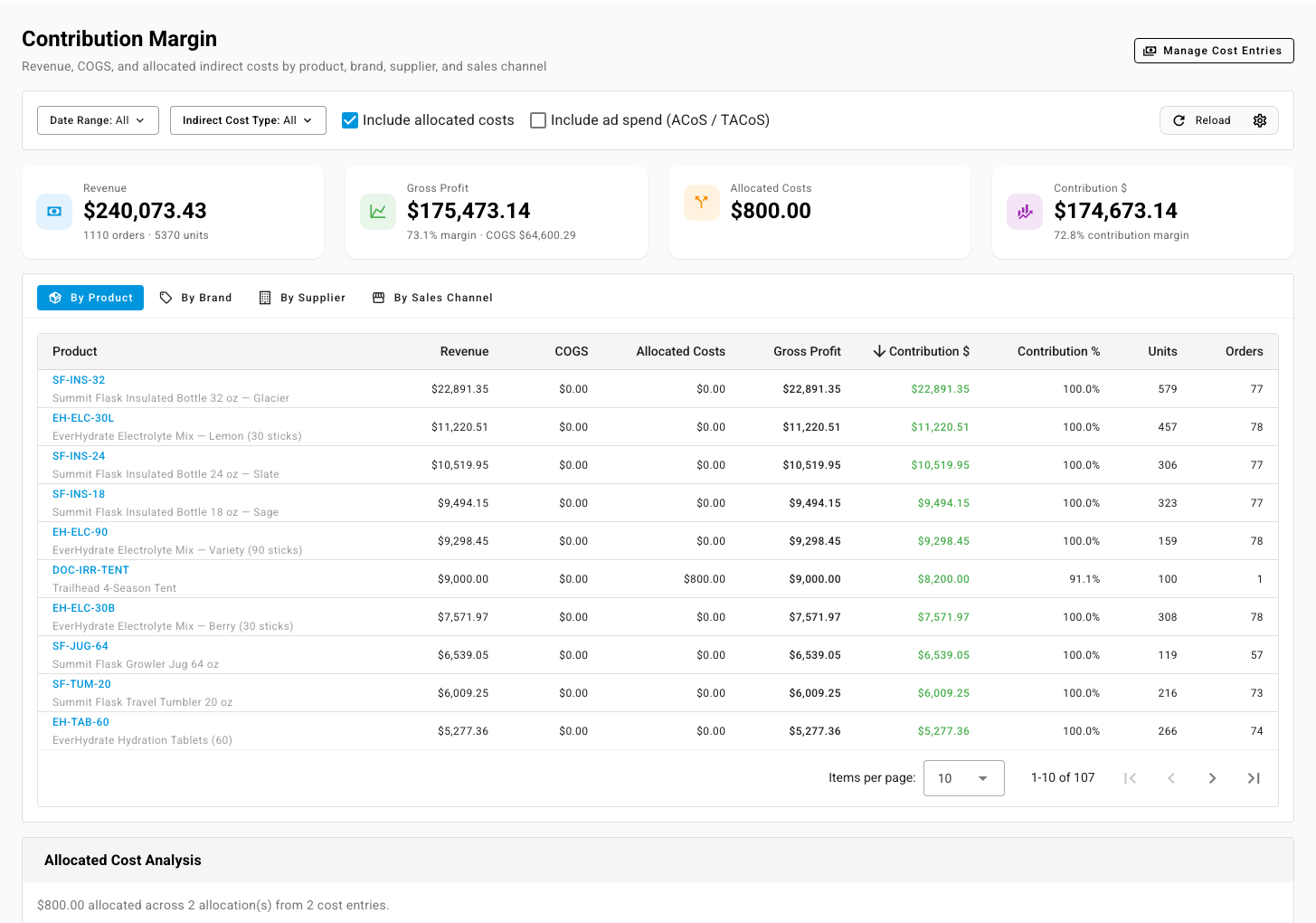
Choose how to group the rows: By Product, By Brand, By Supplier, or By Sales Channel.
-
Read the ladder across the four tiles at the top:
- Revenue, with the number of orders and units.
- Gross Profit, revenue minus cost of goods, with its margin.
- Allocated Costs, the overheads allocated to these sales.
- Contribution $, gross profit minus allocated costs, with the contribution margin as a percentage.
-
Sort by Contribution $ or Contribution % to find what earns its keep and what doesn't.
-
To compare with and without overheads, clear Include allocated costs. The report then shows gross profit as the contribution.
-
To see advertising alongside, select Include ad spend (ACoS / TACoS). The table adds Ad Spend, Attr. Sales, ACoS, TACoS, and Break-even ACoS.
See where allocated costs go
Under the table, Allocated Cost Analysis totals your allocated costs and splits them By Indirect Cost Type, By Target Type (product, brand, supplier, or channel), and By Proration Strategy. Use it to check that each overhead landed where you meant it to.
Next steps
- Analyze profitability and drill down to the order: the same margin ladder over time, down to each order.
- Reports catalog: other financial reports.