Set quote defaults and expiry reminders
Settings → General → Quotes decides how every new quote starts out: the note your customer reads, whether sending it holds stock, how long it stays valid, and whether the customer is reminded before it runs out.
Before you begin
- You need permission to change settings.
- Changes apply to quotes you create or send from now on. Quotes you've already sent keep their memo, allocation and Valid Until date.
Steps
-
Click Settings at the bottom of the left sidebar.
-
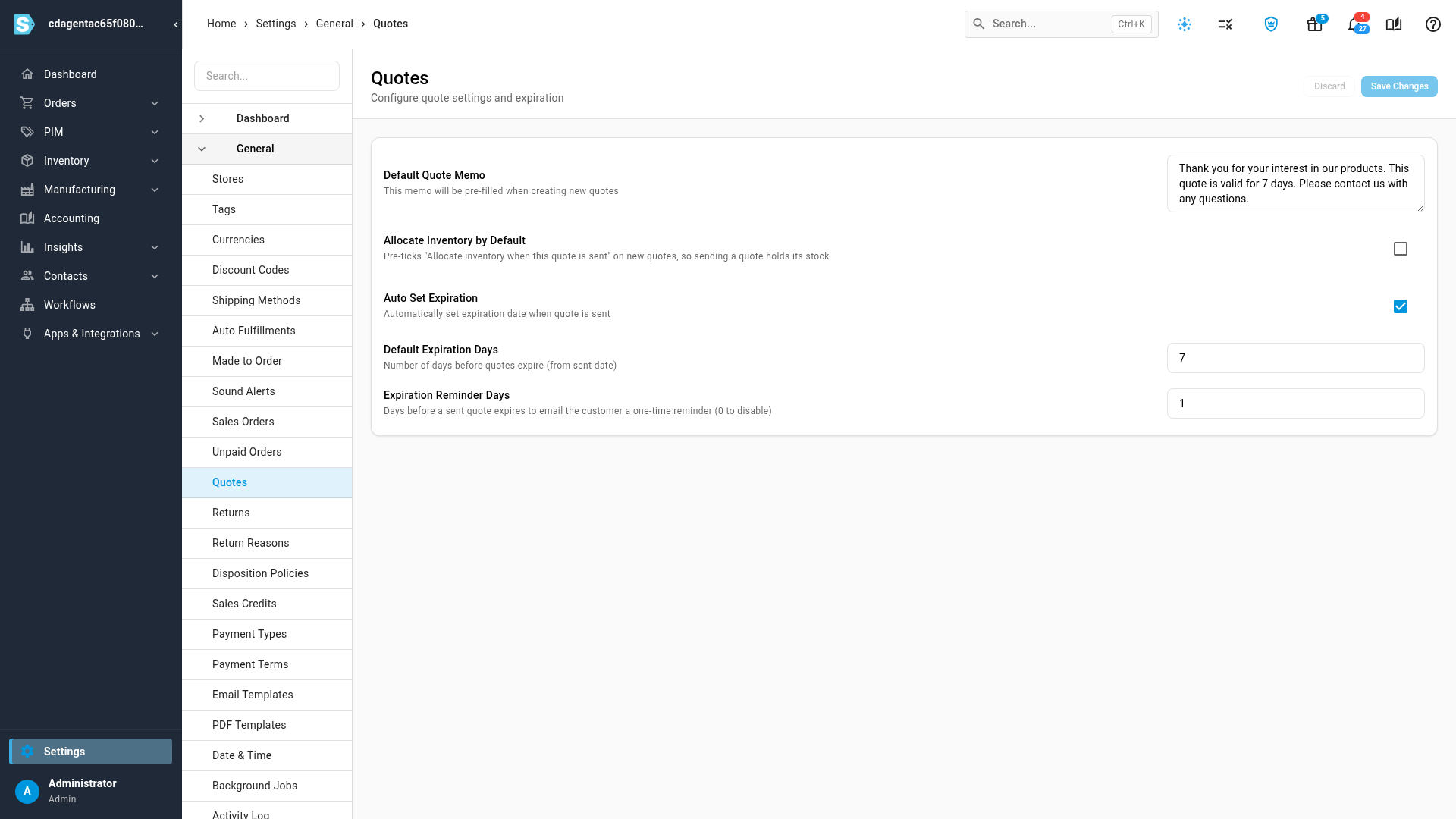
Click the General card to expand it, then click Quotes.
-
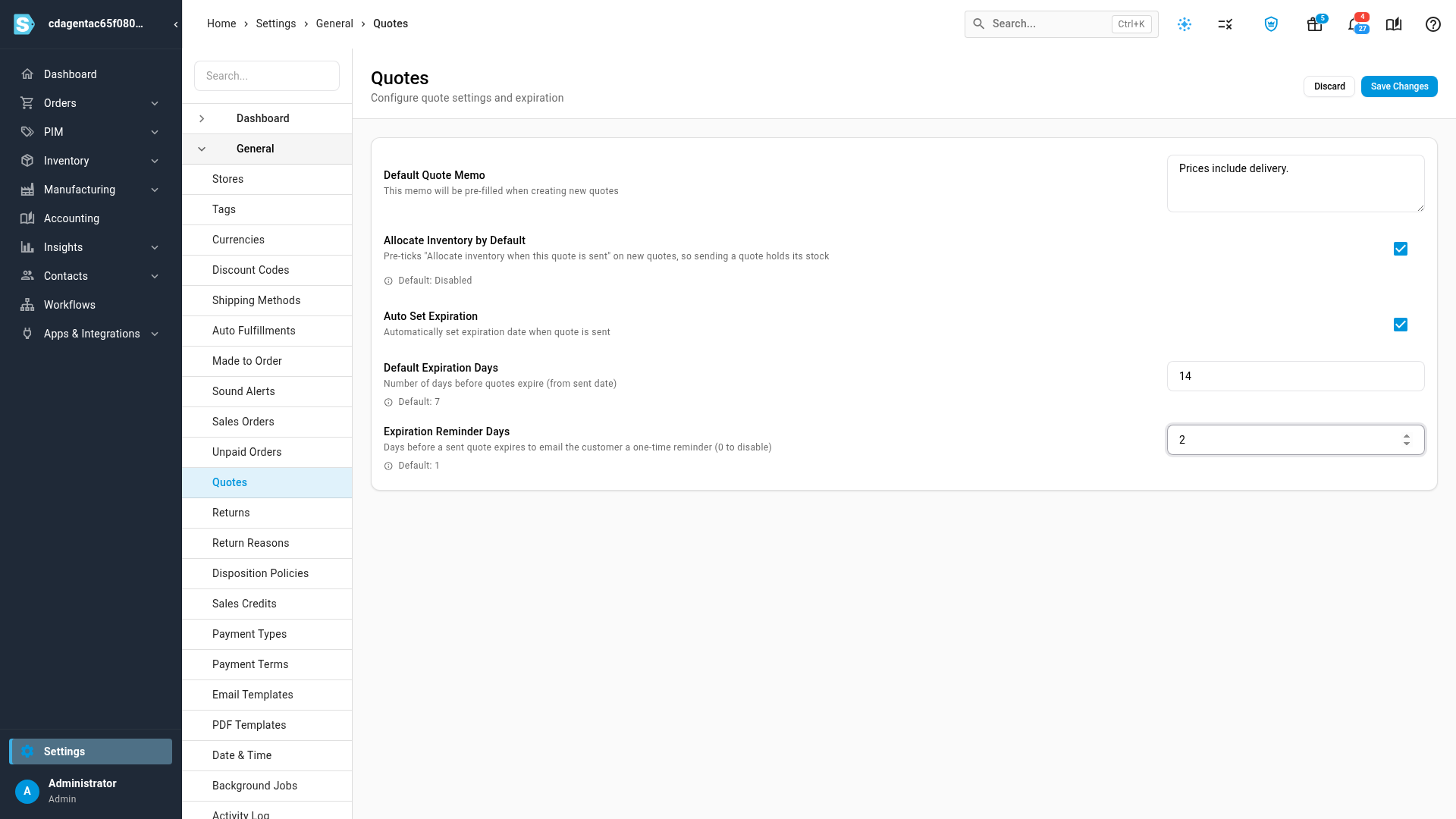
In Default Quote Memo, type the note every new quote should start with. It prints on the quote your customer receives, and you can still change it on each quote.
-
Tick Allocate Inventory by Default if quotes should usually hold stock for the customer once they're sent.
-
Leave Auto Set Expiration ticked to give each quote a Valid Until date when you send it.
-
In Default Expiration Days, enter how many days after sending that date falls.
-
In Expiration Reminder Days, enter how many days before a quote expires the customer gets a reminder email. Enter
0to turn reminders off. -
Click Save Changes. Settings saved successfully confirms it.
What each setting does
| Setting | What it does |
|---|---|
| Default Quote Memo | Fills in the memo on every new quote. The memo prints on the quote PDF, and you can edit it on the quote under Notes. |
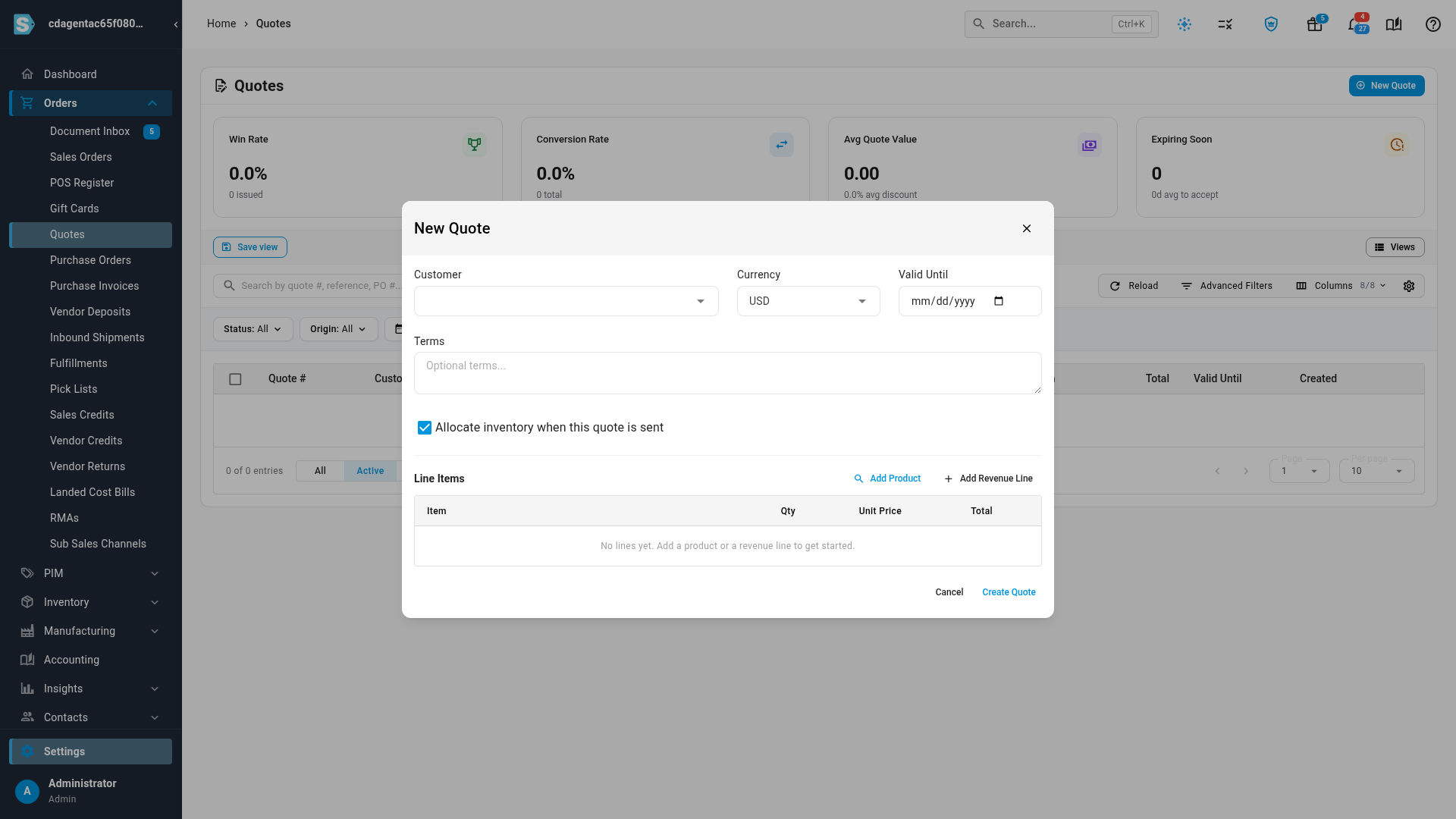
| Allocate Inventory by Default | Starts the New Quote dialog with Allocate inventory when this quote is sent ticked. When you send such a quote, its stock is allocated to the customer. The allocation is released if the quote is declined, expires or is deleted, or if you switch allocation off on the quote. You can untick the box for any single quote. |
| Auto Set Expiration | When you send a quote that has no Valid Until date, SKU.io sets one for you. A date you've already picked on the quote is kept. With this off, a quote without a date never expires on its own. |
| Default Expiration Days | How many days after sending the automatic Valid Until date falls. |
| Expiration Reminder Days | Once a day, SKU.io emails the customer of each sent or viewed quote that expires within this many days. Each quote gets one reminder. If you extend its Valid Until date, it can get another. 0 turns reminders off. |
When a quote's Valid Until date passes, the quote moves to Expired within the hour, and any stock it was holding is released.
The reminder goes to the email address on the quote's customer. A quote whose customer has no email address is skipped and still counts as reminded.
Next steps
- Create & send a quote: build a quote that starts from these defaults.
- Approve a discounted quote: quotes discounted by more than 20% need approval before they can be sent.
Video transcript
Quote settings decide how every new quote starts out. To change them, open Settings at the bottom of the left sidebar. Click the General card to expand it. Its list is long, so scroll down to find Quotes. Click Quotes, and the quote settings page opens on the right. Default Quote Memo is the opening note on every new quote. It prints on the quote your customer receives, and you can still edit it on each quote. Tick Allocate Inventory by Default, and it ticks the allocate box on every new quote. When you send that quote, its stock is held for the customer. The hold ends when the quote becomes an order, or is declined, or expires. With Auto Set Expiration on, sending a quote also sets the date it expires. Default Expiration Days is how long after sending that date falls. A date you already chose on the quote is kept. Expiration Reminder Days emails the customer once, that many days before the quote expires. Set it to zero to switch reminders off. Click Save Changes at the top right of the page, and wait for the confirmation. Now let's check the result. Open the Orders menu in the left sidebar, and then choose Quotes. Then click New Quote, at the top of the list, to start a fresh quote. The allocate box is already ticked on this new quote. You can still untick it whenever a single quote should not hold any stock.